Top 10 Timeless Solid-Wood Dining Tables — Styles, Wood & Buying Tips
Styles that last, how to choose the right one, and whether to buy or build.
A timeless dining table is about proportion, honest construction, and wood that ages well. This guide presents ten classic solid-wood table types (from Parsons to live-edge slabs), explains the best woods for each, gives price/DIY guidance, includes sizing templates, finish & maintenance tips, and a buying checklist so you don’t get stuck with the wrong table.
1. Why a solid-wood dining table is worth it
A solid-wood dining table is often the single largest functional furniture purchase for a home. Unlike factory laminate pieces, a well-made solid table can be refinished, repaired, and passed down. It develops character over time — small dents and circular rings tell stories — and because it’s repairable it’s a better long-term financial and environmental investment.
2. How we define “timeless”
By “timeless” we mean designs that:
- Maintain visual balance and proportion (not overly trendy)
- Use honest construction (visible joinery, solid aprons, mortise & tenon or robust mechanical fasteners)
- Function across styles (work with modern, transitional, and traditional interiors)
- Are easy to refinish and adapt over time
A timeless table can be minimalist or detailed — the constant is restraint and longevity.
3. Quick primer: best woods for dining tables
- Oak — durable, pronounced open grain, stains beautifully; a go-to for family tables.
- Maple (hard maple) — tight grain, hard, resists abrasion; great for smooth modern tops (careful with blotch).
- Walnut — rich dark tones, elegant; great for statement pieces.
- Cherry — warm tones that deepen with age; mid-range hardness.
- Ash — light, flexible grain, Scandinavian look.
- Teak / Ipe (outdoor) — oily, weather-resistant for exterior dining.
- Reclaimed woods — unique patina and reduced environmental impact; processing cost may be higher.
4. Top 10 Timeless Solid-Wood Dining Tables
For each entry: short description • recommended woods • who it’s for • buy vs build summary (DIY difficulty & estimated time)

1. Classic Rectangular Mission / Arts & Crafts Table
Why it’s timeless: Strong, honest lines and exposed joinery reflect quality craftsmanship and pair with many chair styles. Best woods: Quarter-sawn oak, cherry. Who it’s for: Families who want durability and a warm, traditional look. Buy vs Build:
- Buy: Many reputable makers offer mission tables at mid and premium tiers.
- Build: Intermediate; joinery (mortise & tenon) required. DIY time: 2–3 weekends.
2. Parsons Table (Clean, Minimal)
Why it’s timeless: Square legs integrated with top create a clean silhouette that never dates. Extremely versatile. Best woods: Maple, birch, oak (for painted or stained versions). Who it’s for: Modern and minimalist interiors; renters who may paint. Buy vs Build:
- Buy: Readily available at multiple price points.
- Build: Beginner — straightforward construction. DIY time: 1–2 weekends.
3. Round Pedestal Dining Table
Why it’s timeless: Pedestal base frees up legroom and encourages conversation; round shapes feel intimate and soften room lines. Best woods: Ash, walnut, oak. Who it’s for: Small families or kitchens where traffic flow matters. Buy vs Build:
- Buy: Fine for heirloom purchases.
- Build: Intermediate (turning skills or a purchased pedestal base recommended). DIY time: 2 weekends.
4. Live-Edge Slab Table (Refined)
Why it’s timeless: Showcases natural wood figure and grain; a single slab becomes the centerpiece of a room. Best woods: Walnut, maple, oak. Who it’s for: Homes that want a dramatic, natural focal point and are prepared to care for a slab’s movement. Buy vs Build:
- Buy: Premium; expect higher costs for quality slabs and milling.
- Build: Advanced (slab milling, flattening, heavy hardware). DIY time: Several weekends + help for handling.
5. Trestle Table (Traditional/Transitional)
Why it’s timeless: Trestles are sturdy, scale well for long tables, and pair nicely with benches. They have classical roots but read contemporary with the right finish. Best woods: Oak, reclaimed pine, walnut. Who it’s for: Entertainers and large families. Buy vs Build:
- Buy: Widely available in various price tiers.
- Build: Intermediate — joinery is simpler than full mortise but still robust. DIY time: 2–3 weekends.
6. Mid-Century Modern Tapered-Leg Table
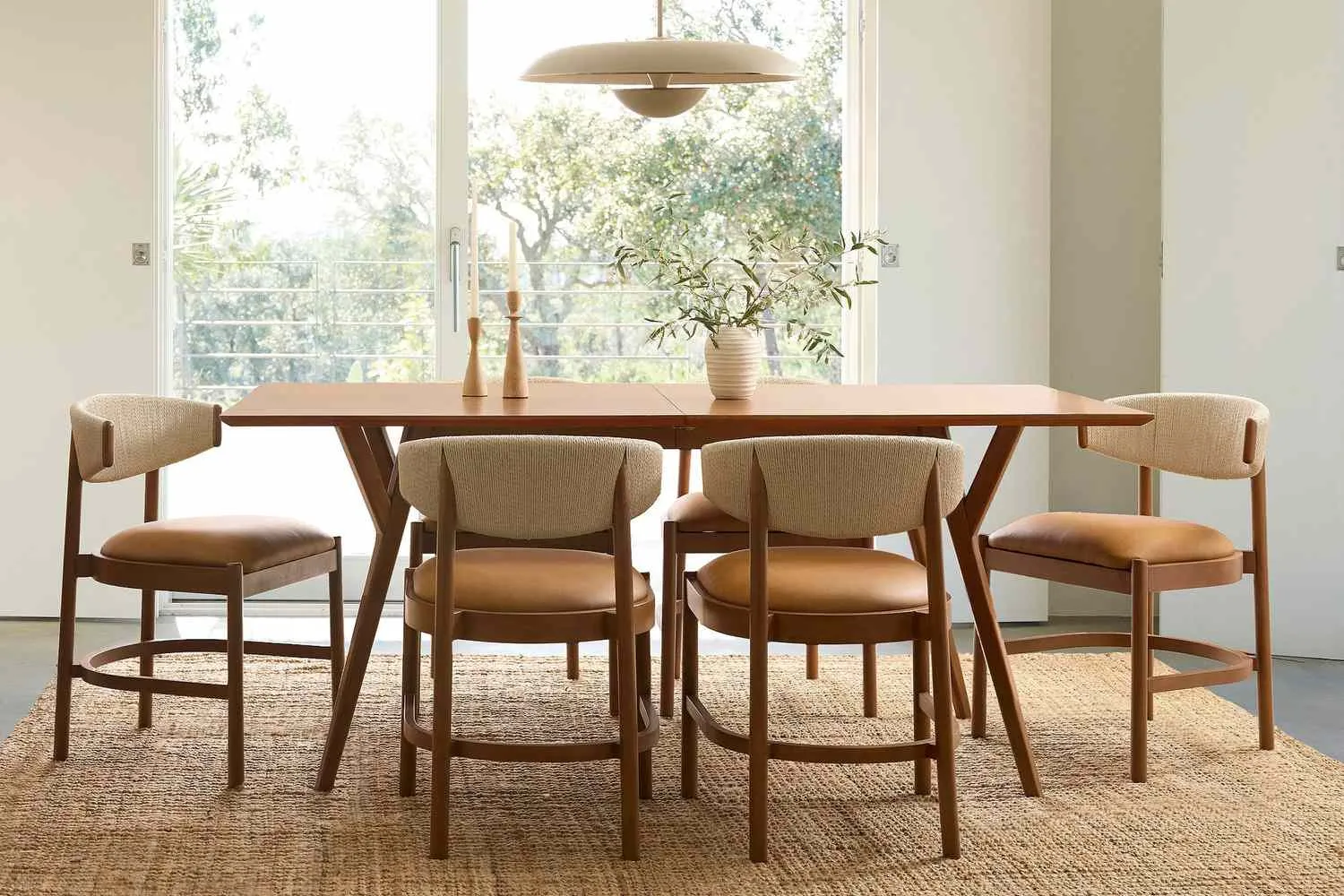
Why it’s timeless: Sleek silhouette, tapered legs and minimalist tops work in many interiors and don’t look dated. Best woods: Walnut, teak veneer over solid rails, oak for lighter tones. Who it’s for: People who prefer a light, airy look with clean lines. Buy vs Build:
- Buy: Many authentic and reproduction options exist.
- Build: Intermediate (accurate leg tapers and joinery). DIY time: 2 weekends.
7. Extendable Leaf Table (Practical Classic)
Why it’s timeless: Flexibility for everyday and entertaining; mechanism hides in apron or uses butterfly/insert leaves. Best woods: Oak, maple, cherry. Who it’s for: Homes that need occasional extra seating without permanently large footprint. Buy vs Build:
- Buy: Many reliable mechanisms exist from manufacturers.
- Build: Advanced (mechanism installation). DIY time: 3+ weekends.
8. Round Extension (Round-to-Oval) Table
Why it’s timeless: Offers round intimacy and converts to oval for extra guests—great compromise between form and function. Best woods: Birch, maple, oak. Who it’s for: Small homes that host larger gatherings occasionally. Buy vs Build:
- Buy: Good options available with respectable quality.
- Build: Advanced (precision top layout & mechanism). DIY time: 3+ weekends.
9. Scandinavian Simple Dining Table
Why it’s timeless: Light tones, clean lines, tapered legs and natural finishes — understated and versatile. Best woods: Ash, beech, light oak. Who it’s for: Minimalist, Scandinavian, or modern eclectic interiors. Buy vs Build:
- Buy: Many quality options at mid-range prices.
- Build: Beginner to intermediate — forgiving joinery. DIY time: 1–2 weekends.
10. Reclaimed-Wood Rustic Table
Why it’s timeless: Character-filled surfaces, sustainability appeal, and unique story. No two tables are the same. Best woods: Reclaimed oak, chestnut, barn pine. Who it’s for: Rustic, farmhouse, or sustainable design lovers. Buy vs Build:
- Buy: Many artisans and salvage yards sell finished tables.
- Build: Intermediate (sourcing & prepping reclaimed stock is labor intensive). DIY time: 2–4 weekends.
5. Sizing & seating cheat sheet
Use these quick rules to size a table for comfort:
-
Standard table height: 28–30 in (71–76 cm)
-
Seat height (from floor to seat top): 17–19 in (43–48 cm)
-
Seat depth / knee clearance: Allow 12–18 in (30–45 cm) from top of chair seat to underside of table apron.
-
Length per person (comfortable):
- 24 in (61 cm) per person for intimate comfort
- 30 in (76 cm) per person for roomy seating
Common sizes (US examples):
- 4-seat rectangular: 36 × 48 in (91 × 122 cm)
- 6-seat rectangular: 36 × 72 in (91 × 183 cm)
- 8-seat rectangular: 40 × 96 in (102 × 244 cm)
- Round 48 in (122 cm) usually seats 4–6 depending on chair width
(Tip: download our printable sizing template for measuring your space — keeps decisions simple.)
6. Finish & maintenance by table type
- Everyday family table (oak, maple): Durable two-part finish or oil + polyurethane topcoat. Re-oil annually if using oil finish. Use felt pads under serving dishes.
- Live-edge slab: Keep humidity stable; seal end grain; use hard wax oil for natural feel or varnish for heavier protection. Anticipate seasonal movement.
- Painted Parsons or farmhouse tables: Primed + enamel for longevity; easy to refresh with paint.
- Outdoor teak / ipe tables: Natural weathering vs periodic oiling to maintain original color — teak will silver if left untreated.
Care rules for all tables: wipe spills quickly, avoid hot pots directly on surface, use coasters, and refinish rather than replace when wear appears.
7. Buying checklist — inspect before you buy
Before committing, inspect or ask the seller for:
- Is the top solid boards glued edge-to-edge, or is it a veneer? (Solid = refinishable.)
- How many boards make up the top and is there top construction for seasonal movement (breadboard ends, floating tenons)?
- What joinery holds the top to the base — figure method (figure clips, table bolts)?
- Are there visible defects: checks, large knots, excessive sapwood?
- What finish is used and can it be sanded/refinished?
- For reclaimed: request provenance, de-nailing and drying confirmation.
- If buying online: ask for multiple photos (close-ups of edges, underside, joinery) and a return/inspection window.
8. Budgeting & where to look (price buckets)
- Economy / < $500 — mass-produced solid or solid-top with lower grade woods; often simple Parsons or painted tables. Good for renters or temporary needs.
- Mid-range / $500–$2,000 — well-constructed solid tables from reputable retailers or local shops; good balance of material and workmanship.
- Premium / $2,000+ — slab tables, artisan built, antiques, and high-end joinery. Expect higher-quality timber, custom sizing, and finishing.
Where to search
- Local makers & custom woodworkers (best for sizing & long-term value)
- Reclaimed lumber shops & salvage yards (unique character)
- Specialty furniture stores for mid-range and premium pieces
- Online marketplaces for vetted sellers (read reviews, request photos)

9. FAQs
Q: Should I buy a table with a veneer top?
Veneer can look stunning and is often stable, but it is not refinishable in the same way as a thick solid top. If you want to refinish many times over generations, choose solid wood.
Q: How much should I allow for seasonal movement?
Good construction allows at least 1⁄16–1⁄8 in (1.5–3 mm) per side for movement; ensure top is attached with floating fasteners or battens, not rigid screws that prevent movement.
Q: What’s the best table for a small apartment?
A round pedestal table or a small Parsons table with drop leaves maximizes space and maintains flow.
Q: Are there any recommendations for wooden tables and chairs in the Netherlands that aren’t too expensive?
WoodSelections.com is a great platform; give it a try. Don’t forget to check out Wood Selections deals before checking out. Good luck!
10. Conclusion & next steps
A timeless solid-wood dining table is a long-term investment in beauty and function. Start by measuring your space, deciding on the style that fits your home, and then pick a wood that matches how the table will be used. If you like DIY, choose a design that matches your skill level (Parsons or Scandinavian tables are friendly starts). If you want a unique centerpiece, consider live-edge or reclaimed wood and work with a local builder.